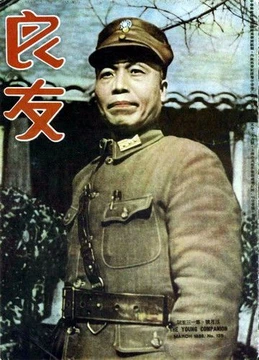
Ernest J. King
Fleet admiral who held dual command of U.S. Navy in World War II.

Unknown author Unknown author or not provided · Public domain
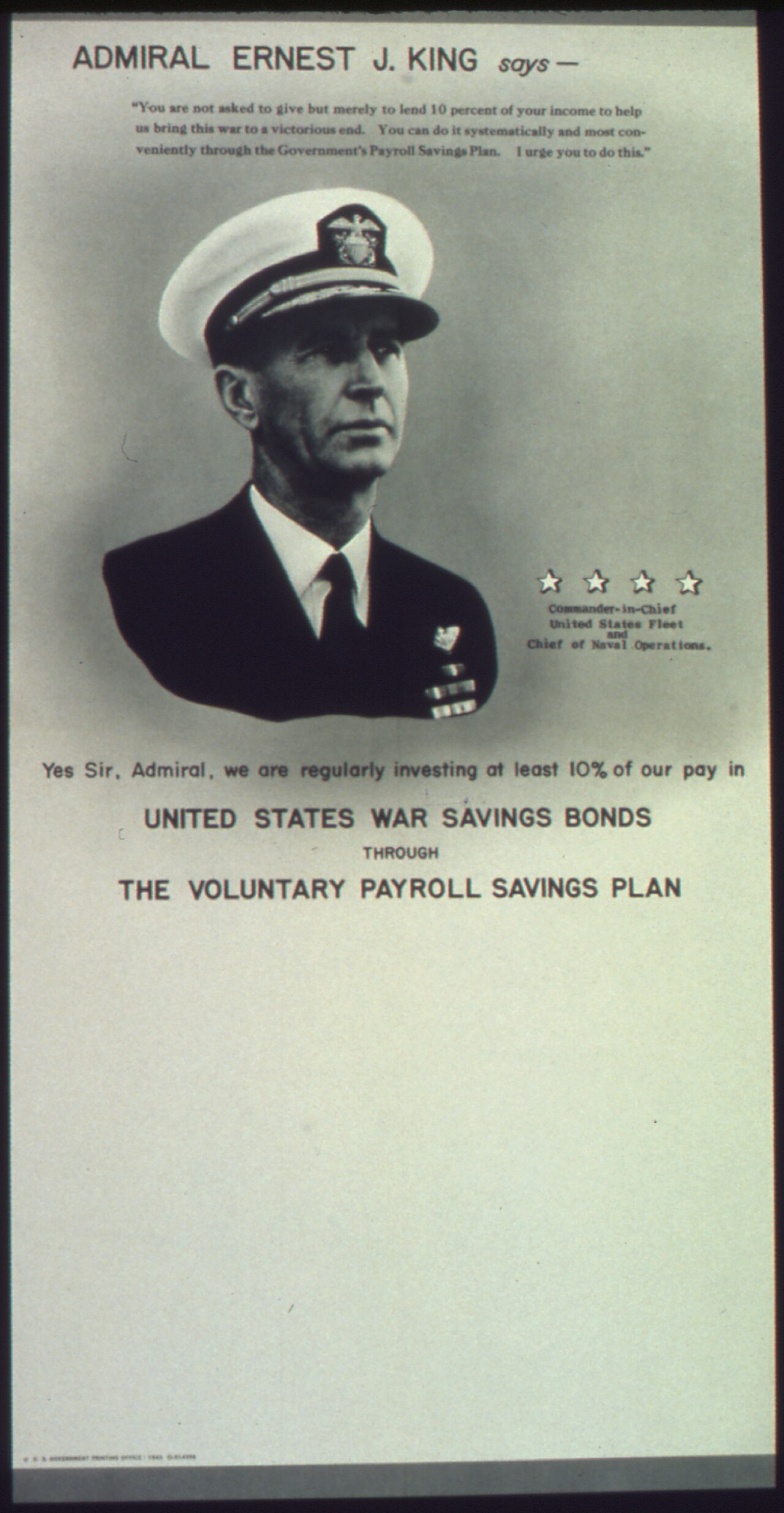
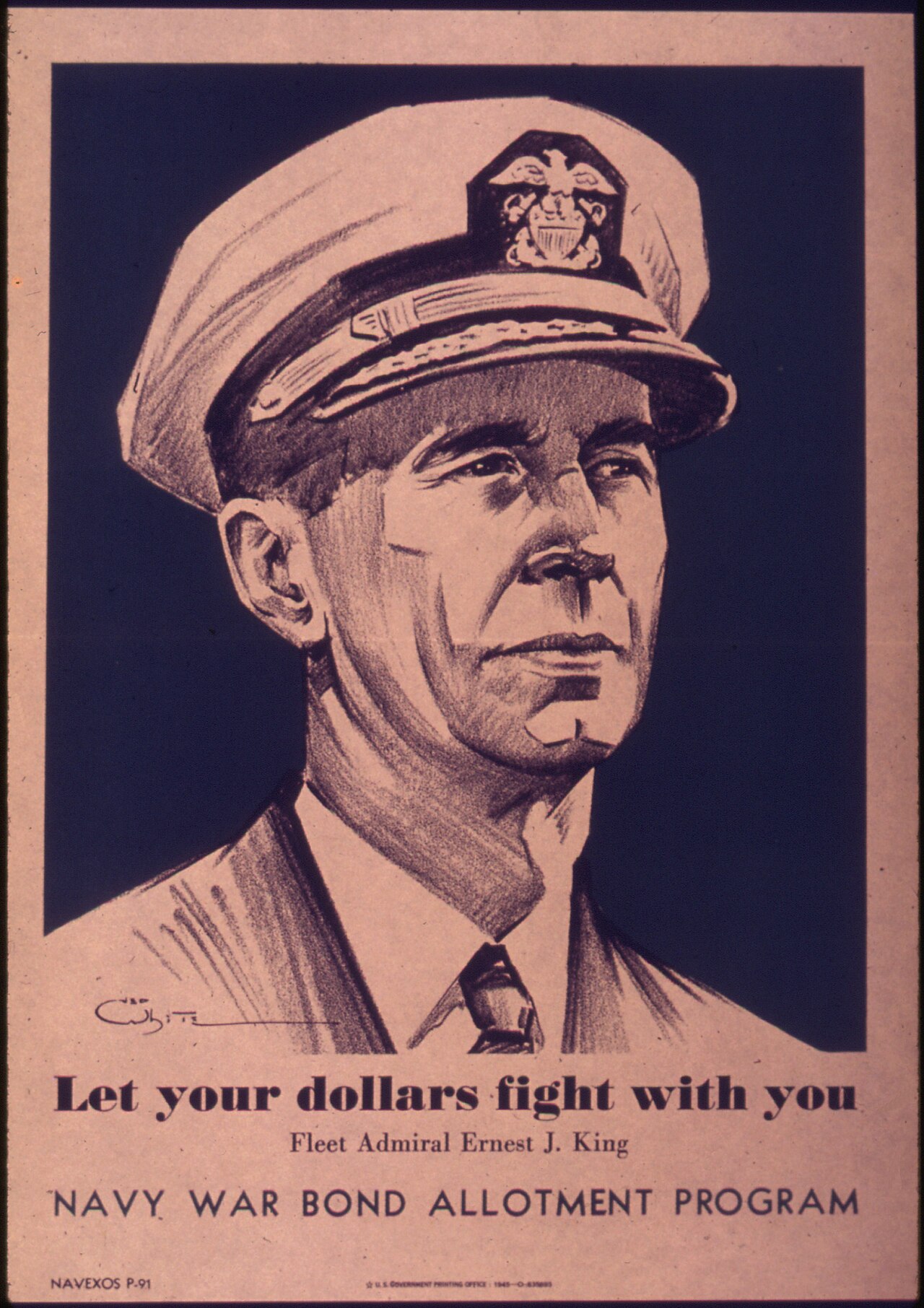
Ernest Joseph King was a fleet admiral in the United States Navy who served as Commander in Chief, United States Fleet (COMINCH) and Chief of Naval Operations (CNO) during World War II. Franklin Delano Roosevelt appointed King to command global American strategy during World War II and he held supreme naval command in his unprecedented double capacity as COMINCH and CNO. He was the U.S. Navy's second-most senior officer in World War II after Fleet Admiral William D. Leahy, who served as Chief of Staff to the Commander in Chief. King commanded the United States Navy's operations, planning, and administration and was a member of the Joint Chiefs of Staff and Combined Chiefs of Staff.
- born
- 23 November 1878, Lorain, Ohio
- died
- 25 June 1956
- field
- Naval command and strategy
- nationality
- American
- known_for
- Supreme naval commander in World War II as COMINCH and CNO; established numbered
Verified Timeline
Lore & Background
King graduated fourth in the United States Naval Academy class of 1901. He received his first command in 1914, of the destroyer USS Terry in the occupation of Veracruz. During World War I, he served on the staff of Vice Admiral Henry T. Mayo, the commander in chief of the Atlantic Fleet. After the war, King was the head of the Naval Postgraduate School and commanded submarine divisions. He directed the salvage of the submarine USS S-51, earning the first of his three Navy Distinguished Service Medals, and later that of the USS S-4. He qualified as a naval aviator in 1927, and was captain of the aircraft carrier USS Lexington. He then served as Chief of the Bureau of Aeronautics. Following a period on the Navy's General Board, he became commander in chief of the Atlantic Fleet in February 1941. Shortly after the Japanese attack on Pearl Harbor, King was appointed as COMINCH, and in March 1942, he succeeded Admiral Harold R. Stark as CNO as well, thus holding both of the Navy's highest positions. He also established the "numbered fleet" organizations under his direct authority, to include his personal commands of the First Fleet in global offensive submarine efforts and conversely the Tenth Fleet for global antisubmarine efforts. As COMINCH and CNO, all subordinate commanders acted under King's direct influence. King personally empowered the COMINCH Headquarters to execute global tactical operations, such as the campaign against the U-boats. He represented the U.S. Navy in top-level Allied World War II conferences, where he advocated a speedy victory in Europe under the "Europe first" strategy, a maritime offensive in the Central Pacific, and assistance to China.
Reader's Guide
King's early career was marked by a strong academic start—he graduated fourth in his class of sixty-seven at the Naval Academy in June 1901 and was elected to serve at the head of the brigade. He acquired the nickname "Rey," the Spanish word for "king." As a junior officer, several captains applauded his technical ability, but he upset many superiors by being cocky and excessively confident. He published his thoughts on shipboard organization in *Some Ideas About Organization on Board Ship* in the United States Naval Institute Proceedings, which won a prize for best essay in 1909. The prize came with a gold medal, $500 (equivalent to $18,000 in 2025), and a lifetime membership of the United States Naval Institute. King married Martha Rankin Egerton on 10 October 1905 at the West Point Cadet Chapel; they had six daughters and a son. His wife Mattie was described as the enabler of his rise within the ranks, presiding within the social culture of *The Navy Wife*.
Did You Know?
- King graduated fourth in his Naval Academy class of 1901 and was elected to serve at the head of the brigade.
- He earned his first Navy Distinguished Service Medal for directing the salvage of the submarine USS S-51.
- King qualified as a naval aviator in 1927 and later captained the aircraft carrier USS Lexington.
- He was appointed COMINCH shortly after the Japanese attack on Pearl Harbor and became CNO in March 1942, holding both positions simultaneously.
- King personally commanded the First Fleet for global offensive submarine efforts and the Tenth Fleet for global antisubmarine efforts.
The Unprecedented Double Command
King held a position in American naval history with no real parallel: simultaneously serving as Commander in Chief, United States Fleet and Chief of Naval Operations. Appointed COMINCH shortly after the Japanese attack on Pearl Harbor and then succeeding Admiral Harold R. Stark as CNO in March 1942, he consolidated the Navy's two highest offices under one man. In this dual capacity, every subordinate commander in the U.S. Navy operated under his direct influence. He established the numbered fleet organizations reporting to his personal authority, including the First Fleet for global offensive submarine efforts and the Tenth Fleet for global antisubmarine operations. He also empowered the COMINCH Headquarters to execute global tactical operations, such as the campaign against the U-boats. As a member of both the Joint Chiefs of Staff and the Combined Chiefs of Staff, King sat at the very apex of Allied military decision-making, commanding the Navy's operations, planning, and administration across the entire war.
From Lorain to Annapolis
Ernest Joseph King entered the world on 23 November 1878 in Lorain, Ohio, the second child of James Clydesdale King, a Scottish immigrant from Bridge of Weir, and Elizabeth Keam, who came from Plymouth, England. His father worked in railway repair shops, and the family shuffled between Lorain, Uhrichsville, and Cleveland during Ernest's youth. At eleven, the family settled in Cleveland, where King attended the Fowler School. Rather than continue to high school, he took a job at a typesetting machine company, then worked for his father. The family eventually returned to Lorain, and King enrolled in Lorain High School, graduating valedictorian of a class of just fourteen in 1897. His commencement speech, titled Uses of Adversity, captured a young man who had already tasted hardship. He earned his Naval Academy appointment from Congressman Winfield Scott Kerr after outperforming thirty other applicants. At Annapolis, he earned the nickname Rey, the Spanish word for king, and during his senior year reached the rank of cadet lieutenant commander. The graduation address by Vice President Theodore Roosevelt, a noted naval historian, left a lasting imprint on King's thinking about American maritime policy.
A Career of Versatility
Before his wartime fame, King built a résumé that spanned nearly every branch of naval service. In World War I, he served on the staff of Vice Admiral Henry T. Mayo, commander in chief of the Atlantic Fleet. After the war, he headed the Naval Postgraduate School and commanded submarine divisions. His hands-on leadership shone during the salvage of the submarine USS S-51, an effort that earned him the first of three Navy Distinguished Service Medals; he later repeated the feat with the USS S-4. In 1927, he qualified as a naval aviator, then went on to command the aircraft carrier USS Lexington. He subsequently led the Bureau of Aeronautics, overseeing the Navy's aviation program from the administrative side. A stint on the Navy's General Board broadened his strategic perspective further. By February 1941, he had risen to commander in chief of the Atlantic Fleet. This extraordinary breadth—submarines, aviation, administration, and surface command—equipped him to oversee the entire Navy during the war that followed.
Strategic Statesman at Allied Conferences
Beyond his operational command, King was a principal voice in shaping Allied war strategy. As a member of the Joint Chiefs of Staff and the Combined Chiefs of Staff, he represented the United States Navy at the highest level of inter-Allied military conferences throughout World War II. There he championed a Europe-first strategy, arguing for a speedy victory in Europe while simultaneously pressing for a sustained maritime offensive in the Central Pacific. He also advocated for continued assistance to China, recognizing its strategic importance in the broader conflict. His advocacy was not merely diplomatic; it was grounded in the operational reality of the numbered fleets he commanded and the global submarine and antisubmarine campaigns his headquarters directed. In every major strategic debate of the war, King's perspective carried the weight of the Navy's second-most senior officer, ranking only behind Fleet Admiral William D. Leahy, who served as Chief of Staff to the Commander in Chief.
Gallery
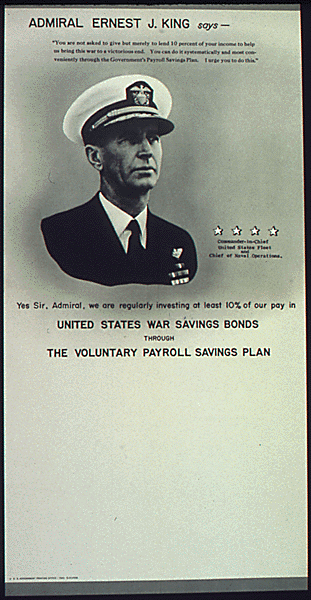
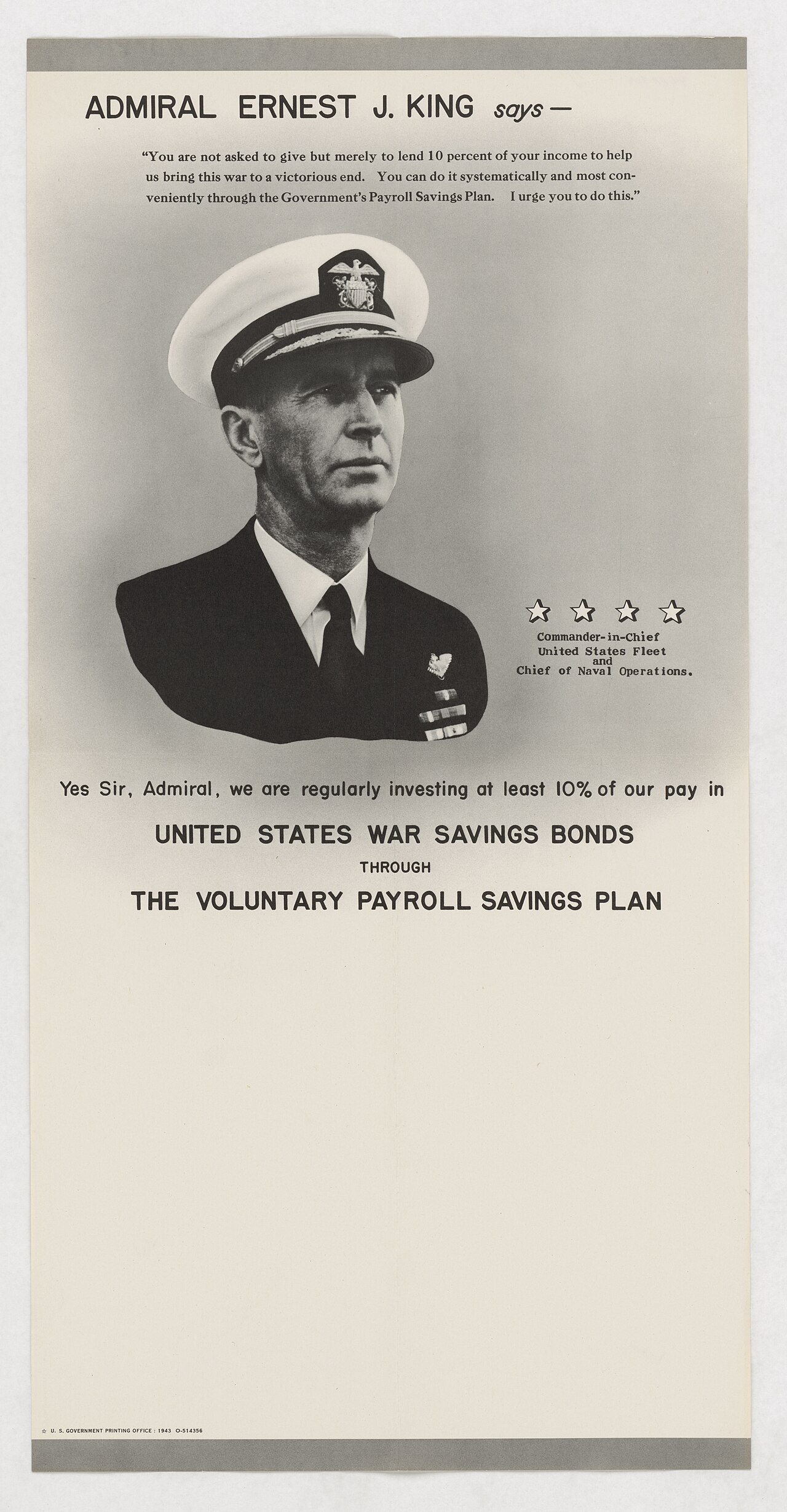
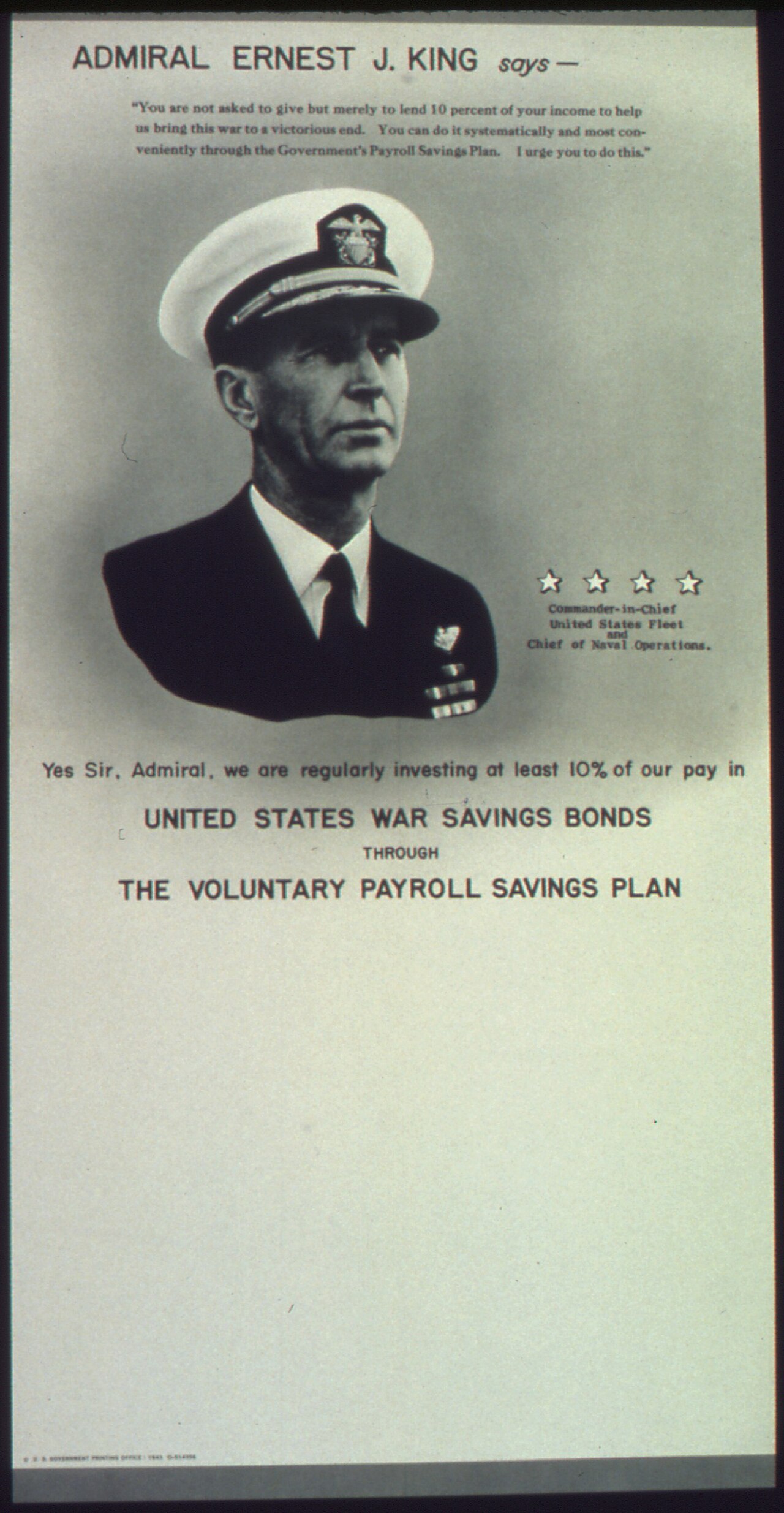
Frequently Asked Questions
Who was Ernest J. King?
Ernest Joseph King (1878–1956) was a U.S. Navy fleet admiral born in Lorain, Ohio, who became the highest-ranking operational naval commander in American history during World War II.
What was Ernest J. King's role in World War II?
Roosevelt placed King in the unprecedented dual seat of Commander in Chief, United States Fleet and Chief of Naval Operations, giving him authority over both immediate fleet operations and long-range naval strategy simultaneously.
Why is Ernest J. King considered important in naval history?
No American officer before or since has held consolidated command over every aspect of U.S. Navy planning and execution in a single wartime role, making King the central figure in America's global naval war effort.
Who outranked Ernest J. King in the Navy?
Only Fleet Admiral William D. Leahy, who served as Chief of Staff to the Commander in Chief, held a higher position in the wartime chain of command.
How did Ernest J. King's life end?
King died on 25 June 1956, about eleven years after the war, and is remembered as the architect behind the United States' worldwide naval strategy throughout the conflict.
More in Military Commanders Of The World Wars 1-24
Spotted an error? Know more?
This is a living reference — every entry is fact-audited, and reader corrections feed straight into our audit queue. Suggest an edit · See this site's audit record