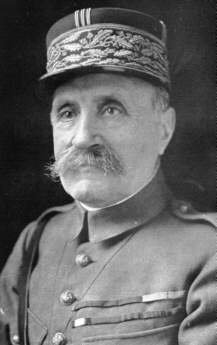
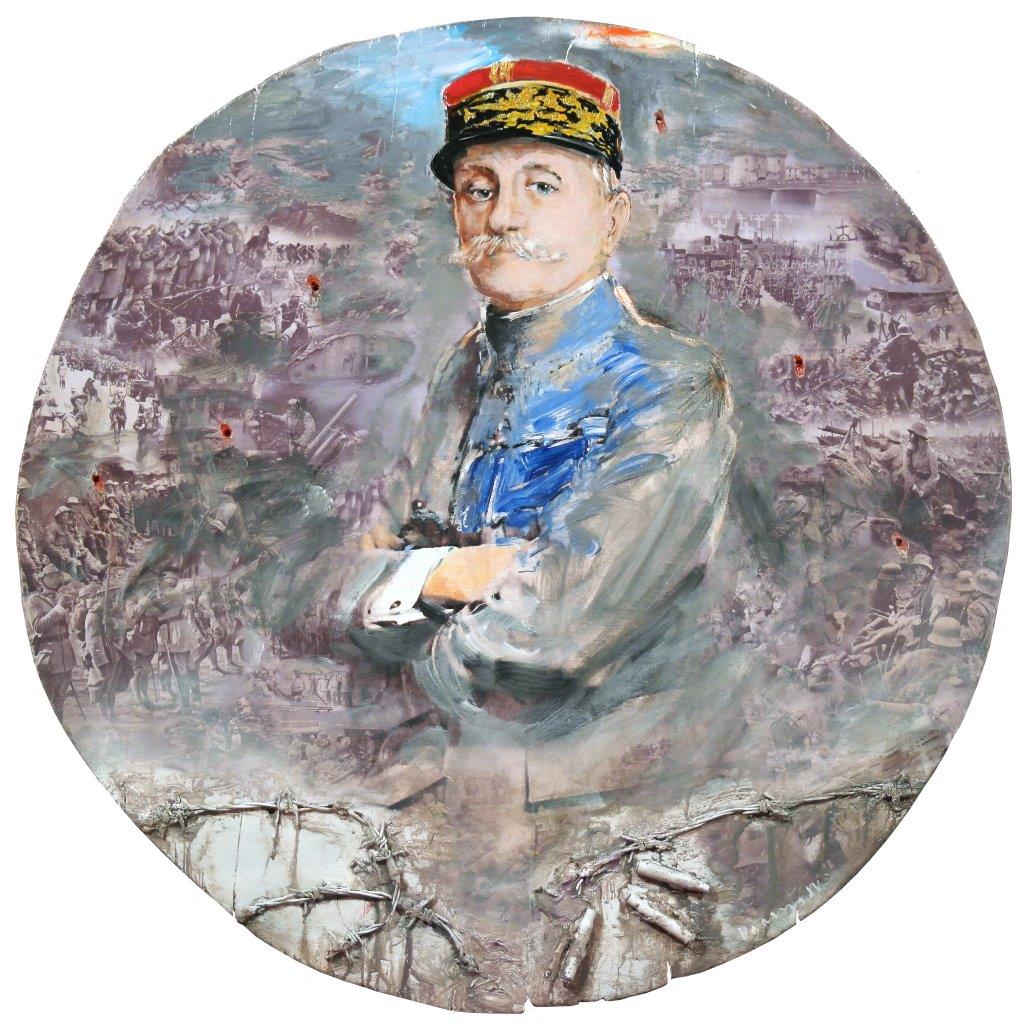
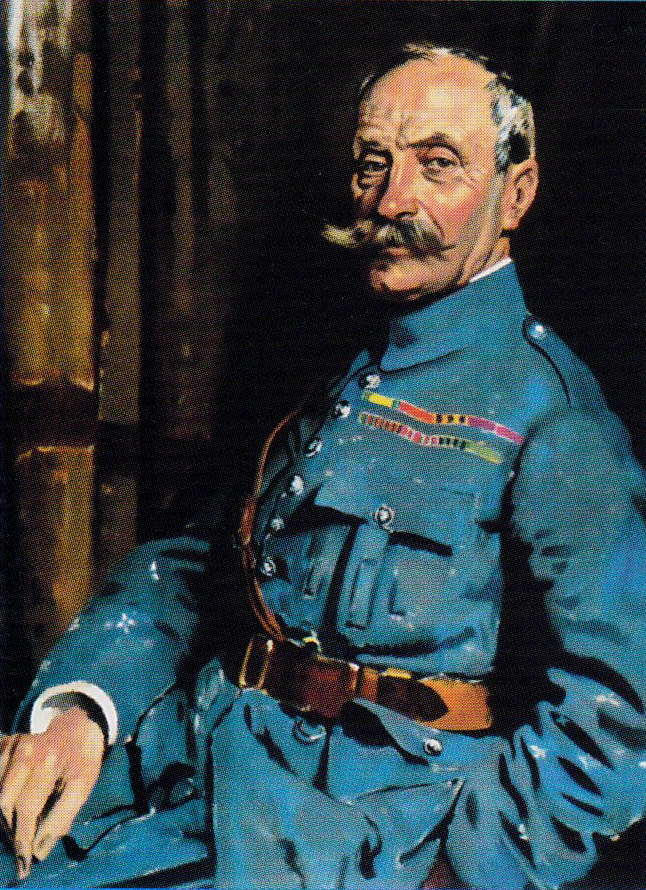
Ferdinand Foch
Supreme Allied Commander who coordinated the final Allied offensives in 1918.

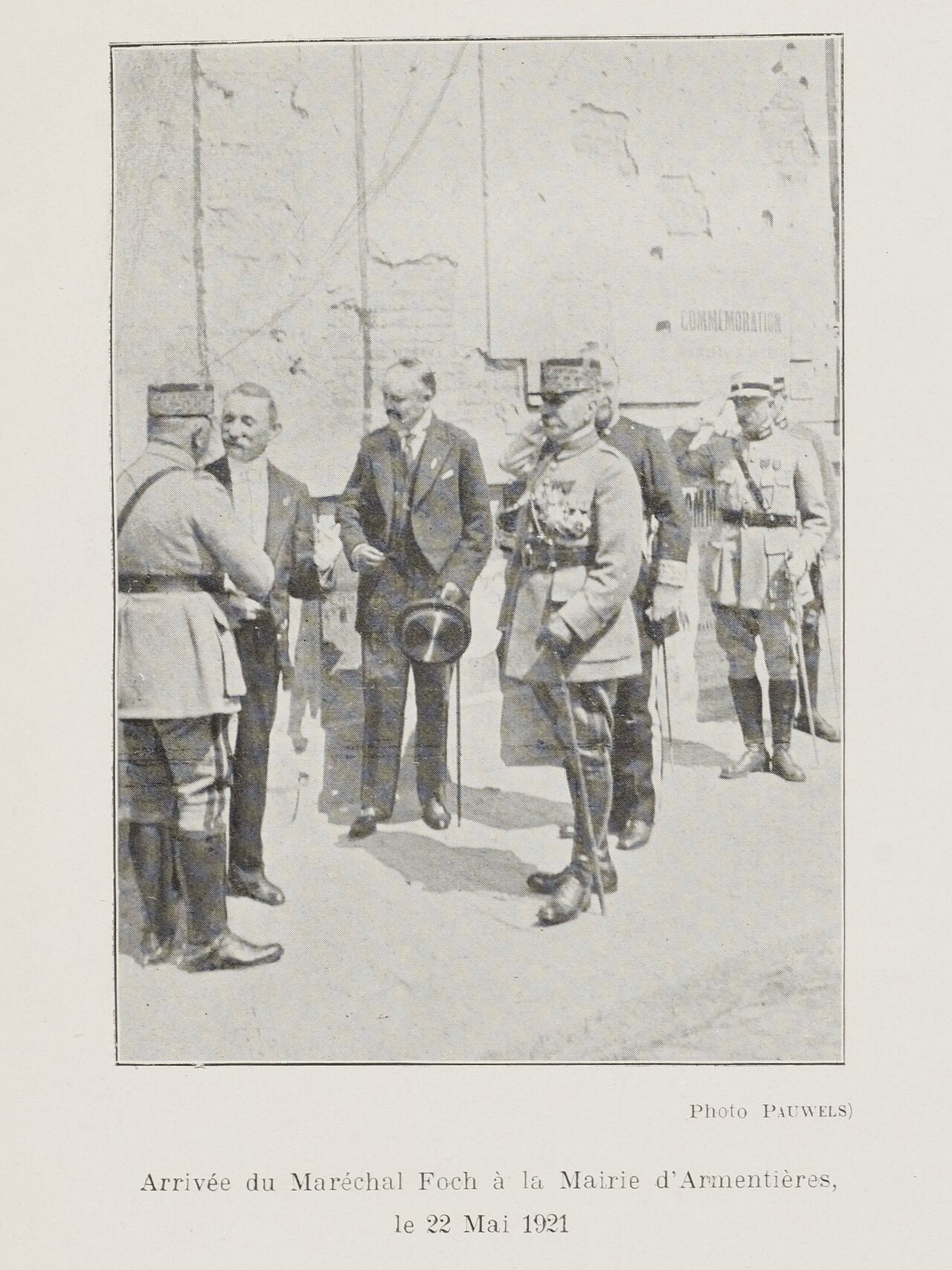
PAUWELS · CC0
Ferdinand Foch (2 October 1851 – 20 March 1929) was a French general, Marshal of France, and a member of the Académie Française and Académie des Sciences. He distinguished himself as Supreme Allied Commander on the Western Front during the First World War in 1918. He successfully coordinated the French, British and American efforts, deftly handling his strategic reserves, stopping the German offensive and launching a war-winning counterattack. In November 1918, Marshal Foch accepted the German cessation of hostilities and was present at the Armistice of 11 November 1918.
- born
- 2 October 1851, Tarbes, France
- died
- 20 March 1929
- field
- Military command
- nationality
- French
- known_for
- Supreme Allied Commander on the Western Front, 1918
Verified Timeline
Lore & Background
Ferdinand Foch was born in Tarbes, a municipality in the department of Hautes-Pyrénées, in southwestern France, into a modest, devout, middle-class Catholic family. He attended Jesuit schools and entered the École Polytechnique, where he studied mathematics, engineering, science, history, and literature. He became an artillery officer and later taught at the École Supérieure de Guerre from 1895 to 1901. His lectures, published as 'Des Principes de la Guerre' in 1903 and 'De la Conduite de la Guerre' in 1904, reintroduced the concept of the offensive to French military theory. He was promoted to Général de Brigade in 1907 and assumed command of the French War College. In 1913 he took command of XX Corps at Nancy. At the outbreak of war in August 1914, Foch's XX Corps participated in the brief invasion of Germany before retreating and successfully blocking the Germans short of Nancy. He commanded the French Ninth Army during the First Battle of the Marne, where his prestige soared. During the advance at the marshes at St.-Gond he is said to have declared: 'My centre is yielding. My right is retreating. Situation excellent. I am attacking.' He was then promoted to assistant commander-in-chief for the Northern Zone, a role which evolved into command of Army Group North. At the end of 1916, partly owing to disappointing results and wartime political rivalries, Foch was transferred to Italy. He was appointed 'Commander-in-Chief of the Allied Armies' on 26 March 1918. He played a decisive role in halting a renewed German advance on Paris in the Second Battle of the Marne, after which he was promoted to Marshal of France. On 11 November 1918, Foch accepted the German request for an armistice. He considered the Treaty of Versailles too lenient on Germany. Winston Churchill attributed this famous but apocryphal quote to Foch: 'This is not Peace. It is an Armistice for twenty years.'
Reader's Guide
Ferdinand Foch's significance lies in his role as Supreme Allied Commander on the Western Front in 1918. Author Larry H. Addington says, 'to a large extent the final Allied strategy which won the war on land in Western Europe in 1918 was Foch's alone.' He was a disciple of Napoleon and made use of the lessons taught by Moltke. His re-examination of France's defeat in 1870 was among the first of its kind. At the War College, Foch was a professor of military history, strategy, and general tactics, and he employed mathematical terms in his lectures. His thinking on military doctrine was shaped by the Clausewitzian philosophy that 'the will to conquer is the first condition of victory.' While Foch advised 'qualification and discernment' in military strategy and cautioned that 'recklessness in attack could lead to prohibitive losses and ultimate failure,' his concepts, distorted and misunderstood by contemporaries, became associated with the extreme offensive doctrines of his successors. The cult of the offensive came to dominate military circles, and Foch's reputation was damaged when his books were cited in the development of the disastrous offensives that brought France close to ruin and the army to mutiny in 1917. Foch advocated peace terms that would make Germany unable to pose a threat to France ever again.
Did You Know?
- Foch's only son Germain was killed in action during the Battle of the Frontiers in August 1914, though his passing was confirmed only the following February.
- Foch was a member of both the Académie Française and the Académie des Sciences.
- During the First Battle of the Marne, Foch is said to have declared: 'My centre is yielding. My right is retreating. Situation excellent. I am attacking.'
- Foch was transferred to Italy at the end of 1916, partly owing to disappointing results of the Somme offensive and wartime political rivalries.
- Winston Churchill attributed the apocryphal quote about the Treaty of Versailles—'This is not Peace. It is an Armistice for twenty years'—to Foch.
Roots and the Making of a Mind
Ferdinand Foch entered the world on 2 October 1851 in Tarbes, a small town in southwestern France, into a modest Catholic household where his father worked as a civil servant. From childhood, books consumed him—military history, strategy, and literature became his constant companions. His education moved through several provincial schools before landing at Jesuit colleges in Saint-Étienne and Metz, where a professor famously declared him a "geometric mind" destined for the Polytechnique. That prediction held: after a brief enlistment in the 4th Infantry during the Franco-Prussian War, Foch passed the competitive grandes écoles examinations in 1871 and entered the École Polytechnique, where he devoured mathematics, engineering, science, and history with equal intensity. He chose the artillery track and received his commission in 1873. His personality was striking—physically strong, sharply intelligent, and profoundly quiet. When he did speak, it came in rapid volleys accompanied by animated hand gestures that only close acquaintances could follow. His one rigid rule was eating at noon and 7:30; otherwise he worked from dawn deep into the night. His catchphrase, "Pas de protocole!" reflected his desire to remain accessible to every officer regardless of rank.
Supreme Command and the War's Decisive Year
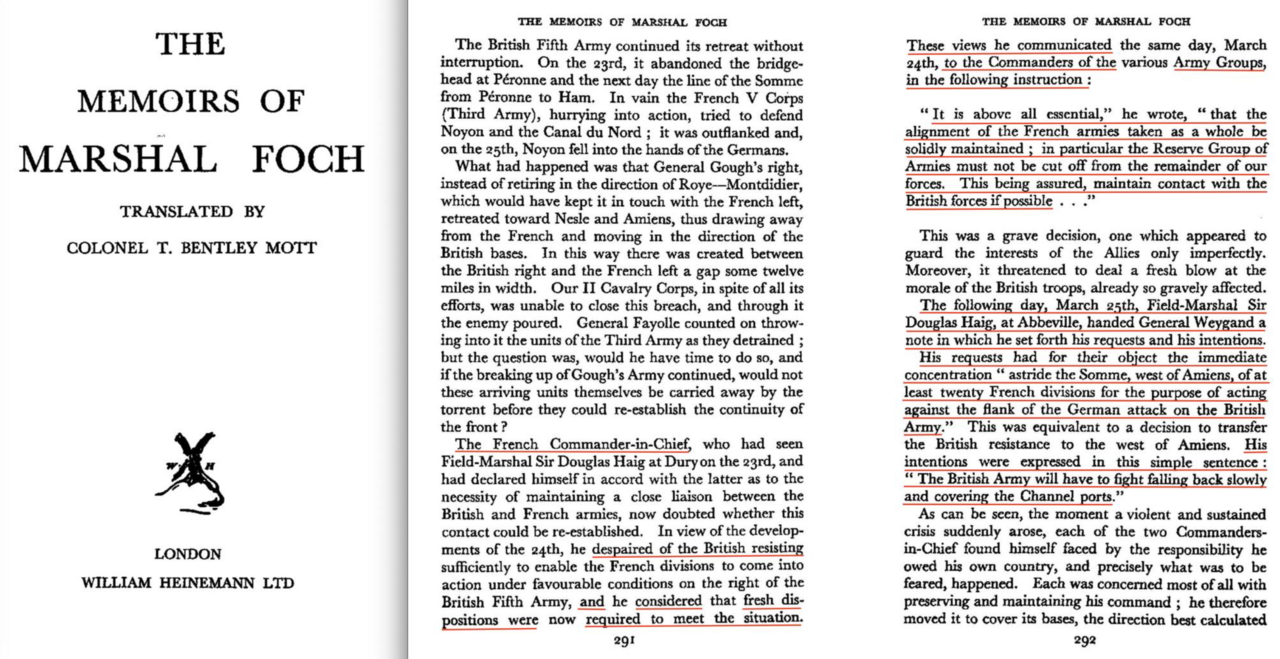
When the German spring offensive of 1918 threatened to shatter the Western Front, Foch was named Commander-in-Chief of the Allied Armies on 26 March, a role that demanded he weave together French, British, and American forces into a single strategic whole. He had earned this position through years of hard-fought campaigns: blocking the Germans short of Nancy in 1914, commanding the Ninth Army at the Marne, and coordinating with British forces at Ypres and the Somme. Yet it was 1918 that defined his legacy. Facing an all-out German push toward Paris, Foch deployed his strategic reserves with remarkable precision, halted the advance at the Second Battle of the Marne, and then unleashed a counterattack that turned the tide of the entire war. Historian Larry H. Addington argued that the final Allied strategy which secured victory on land in Western Europe was, to a large extent, Foch's alone. On 11 November 1918, it was Foch who accepted Germany's request for cessation of hostilities, standing as the architect of a peace that he would spend his remaining years questioning.
The Theorist Behind the General
Long before he commanded armies, Foch shaped the way French officers thought about war. As a professor and later head of the War College from 1907 to 1911, he became the generation's most original military thinker, drawing on both Napoleon's campaigns and Moltke's Prussian lessons to build a coherent theory of offensive strategy. His re-examination of France's 1870 defeat was among the first systematic analyses of its kind, and he wove mathematical language into his lectures on tactics and strategy, a habit that reflected his Polytechnique training. He inspired a new generation of French officers with renewed confidence in their military heritage and directly influenced Chief of General Staff Joseph Joffre when the latter drafted Plan XVII in 1913. Foch's approach was analytical rather than dogmatic: he treated history as a laboratory, extracting principles from the Franco-Prussian and Napoleonic wars that could be applied to the challenges of the twentieth century. This intellectual foundation would prove essential when, in 1918, he was called upon to coordinate three nations' armies against a single, overwhelming enemy.
The Peace He Fought For
Foch's final act as a military leader on 11 November 1918—accepting Germany's request for an armistice—was immediately followed by a political battle he was far less comfortable in. He had fought for a peace that would render Germany permanently incapable of threatening France again, and when the Treaty of Versailles was finalized, he regarded it as dangerously lenient. Winston Churchill later attributed to Foch the now-famous line, "This is not Peace. It is an Armistice for twenty years," though the quote is widely considered apocryphal. The prophecy proved uncannily accurate: the next great European war began precisely two decades later. Foch's vision for lasting security was rooted in the same analytical rigor he had brought to the battlefield—he could not accept a settlement that left the structural conditions for renewed conflict intact. Beyond the wars, he held seats in both the Académie Française and the Académie des Sciences, testaments to a mind that ranged across military, intellectual, and cultural life. He died on 20 March 1929, still believing the peace had been too fragile.
Gallery
Frequently Asked Questions
Who is Ferdinand Foch?
Ferdinand Foch was a French general born in Tarbes in 1851 who ultimately became a Marshal of France and a member of both the Académie Française and the Académie des Sciences. He is best remembered for leading the Allied war effort on the Western Front in the final year of World War I.
What was Ferdinand Foch's role in World War I?
In 1918 he was appointed Supreme Allied Commander, giving him authority to direct the combined French, British, and American forces on the Western Front. He used his strategic reserves to blunt the German spring offensive and then timed a series of counterattacks that shattered the remaining German defenses.
How did Ferdinand Foch's story end?
Foch personally received the German request to cease fighting in November 1918 and stood witness to the Armistice signed on 11 November. He subsequently retired from active service and died on 20 March 1929.
Why is Ferdinand Foch important in military history?
He is credited with unifying three major Allied armies under a single strategic vision at the war's most decisive moment. His disciplined management of reserves and sequenced offensives is widely regarded as the key factor that turned the tide on the Western Front and ended the conflict.
What made Ferdinand Foch's command style distinctive?
Rather than allowing each nation to operate independently, Foch imposed a centralized command structure and carefully staggered attacks so that fresh reserves could strike at the moment of greatest German weakness. This coordinated, reserve-driven approach is what set his 1918 campaign apart from earlier, more fragmented Allied operations.
More in Military Commanders Of The World Wars 1-24
Spotted an error? Know more?
This is a living reference — every entry is fact-audited, and reader corrections feed straight into our audit queue. Suggest an edit · See this site's audit record