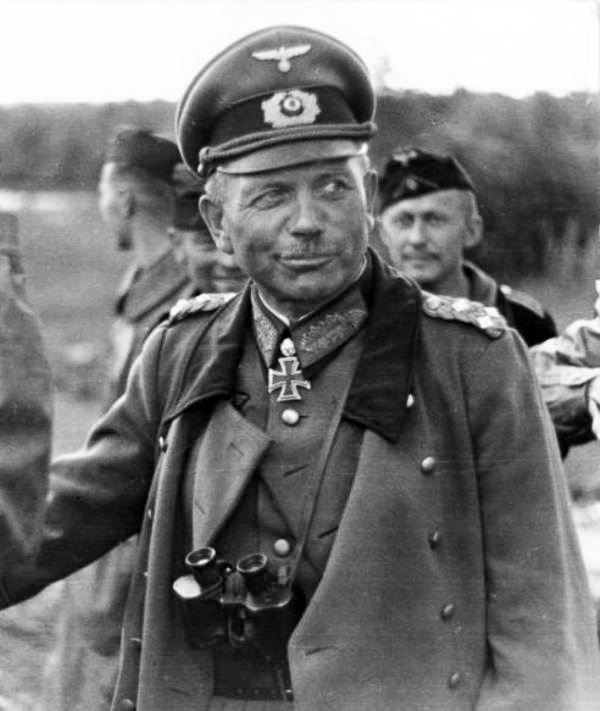
Heinz Guderian
German general who pioneered blitzkrieg and panzer warfare.

Ludwig Knobloch · CC BY-SA 3.0 de
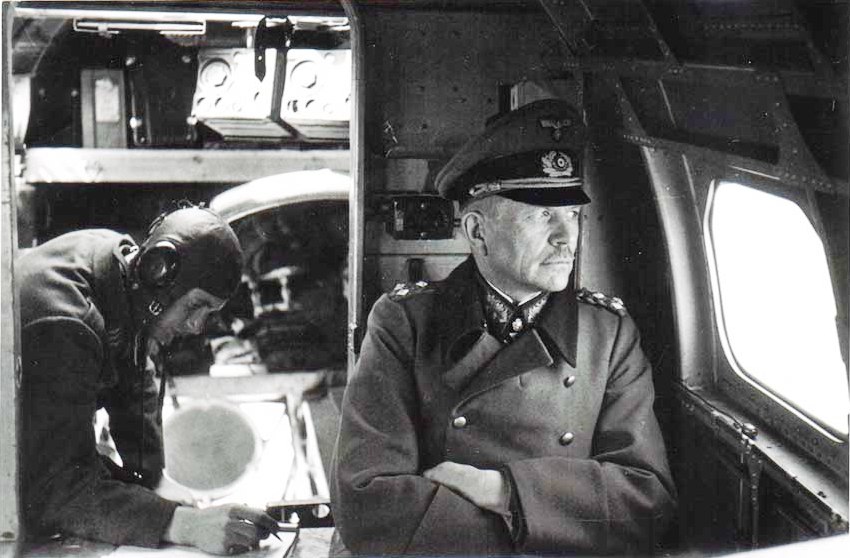
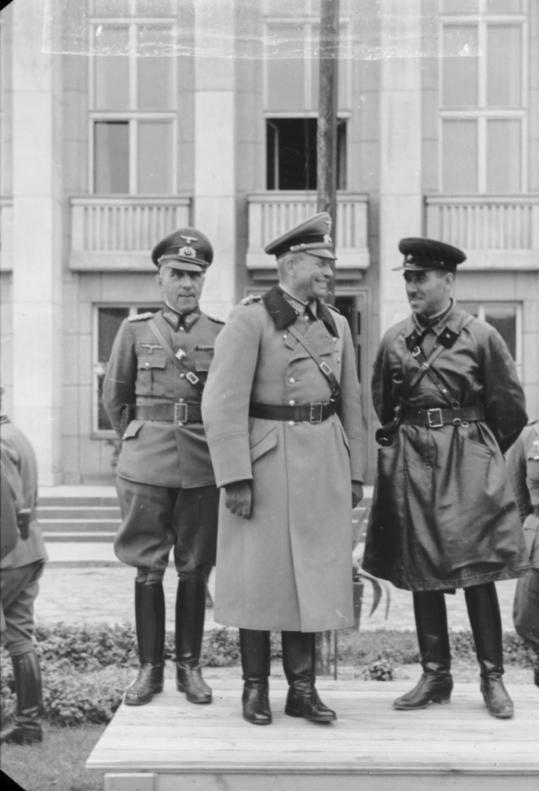
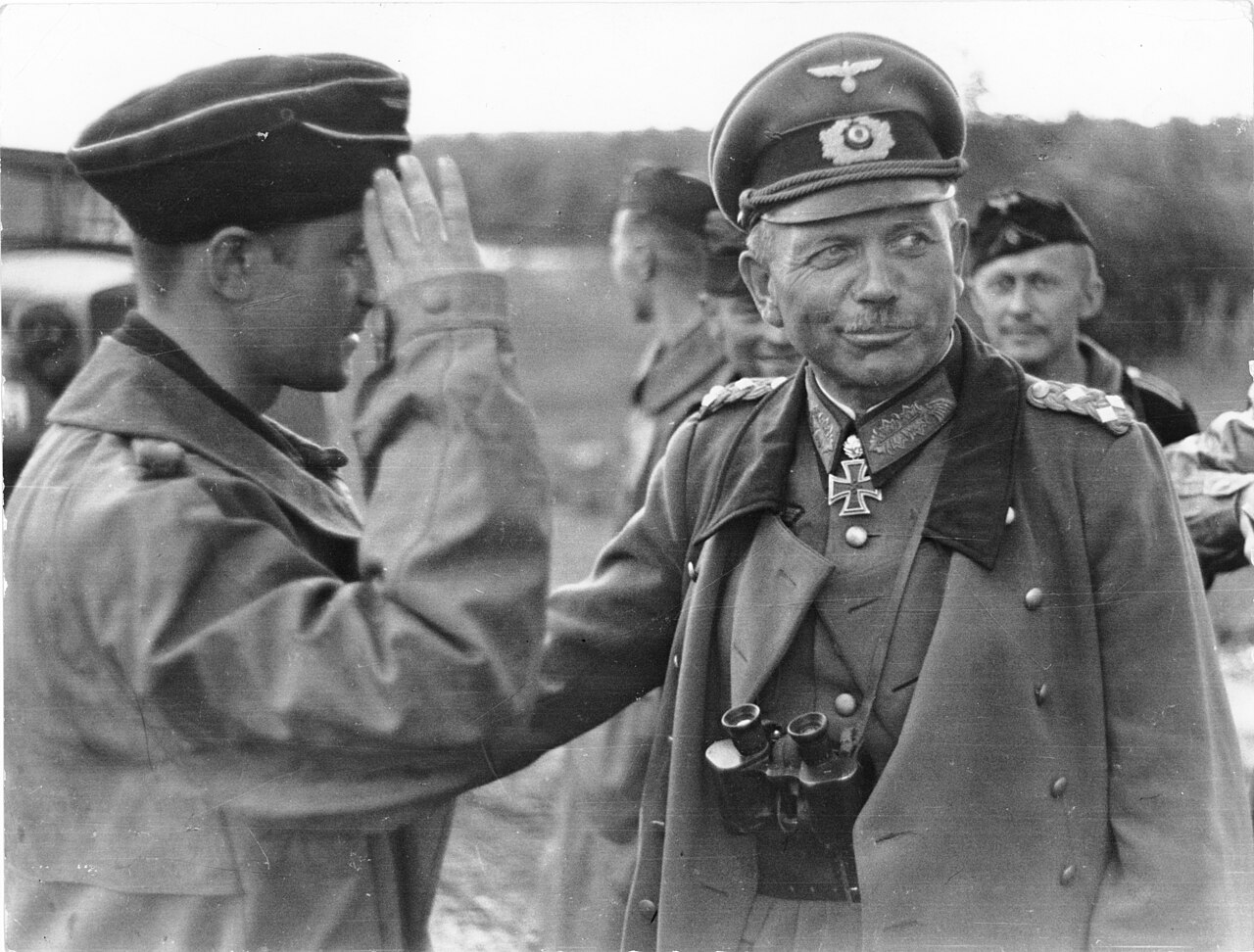
Heinz Wilhelm Guderian was a German army general and military theorist who pioneered and advocated for what became known as the 'blitzkrieg' approach. He played a central role in developing the panzer division concept and tank warfare, leading armored units in the invasions of Poland, France, and the Soviet Union during World War II.
- born
- 17 June 1888, Kulm, West Prussia
- died
- 14 May 1954, buried in Goslar
- field
- German army general and military theorist
- nationality
- German
- known_for
- Pioneer of blitzkrieg and panzer division concept
Verified Timeline
Lore & Background
Guderian was born in Kulm, West Prussia, on 17 June 1888, the son of Prussian officers. He entered the army as an officer cadet on 28 February 1907 with the 10th Hanoverian Light Infantry Battalion, under his father's command. He became a second lieutenant on 27 January 1908. During World War I, he served as a communications officer and commander of a radio station, was promoted to first lieutenant in November 1914, and to captain on 15 November 1915. He fought at the Battle of Verdun and was appointed to the General Staff Corps on 28 February 1918. After the war, he strongly opposed the Treaty of Versailles, particularly the ceding of West Prussia to Poland, and held anti-Polish prejudices, describing Poles as 'poor, dirty, incompetent, stupid and vulgar, depraved and treacherous.' In the 1920s, he studied armored warfare tactics introduced by Ernst Volckheim and wrote five papers for Military Weekly between 1922 and 1928. He was promoted to major in 1927 and posted to the transport section of the Truppenamt. By 1931, he was promoted to lieutenant-colonel and became chief of staff to the Inspectorate of Motorized Troops under Oswald Lutz.
Reader's Guide
Guderian's significance lies in his role as a key advocate and developer of the panzer division and blitzkrieg doctrine, though his memoirs later overstated his centrality. He and his superior Lutz worked together to create a panzer force, with Guderian as the public face. In 1936, Lutz asked Guderian to write 'Achtung – Panzer!', a polemical work promoting mechanized warfare. Guderian led an armored corps in the Invasion of Poland with the rank of General der Panzertruppe, and during the Invasion of France commanded the armored units that attacked through the Ardennes and overwhelmed Allied defenses at the Battle of Sedan. He led the 2nd Panzer Army as Generaloberst during Operation Barbarossa. After the failure to capture Moscow and a disagreement with Hitler, Guderian was dismissed. In early 1943, Hitler appointed him Inspector General of Armoured Troops, where he had broad responsibility to rebuild panzer forces but saw limited success due to Germany's worsening war economy. After the 20 July Plot, Guderian was appointed Acting Chief of the General Staff and served on Hitler's 'Court of Honour', which dismissed people from the military so they could be tried and executed. His troops carried out the criminal Commissar Order during Barbarossa, and he was implicated in reprisals after the Warsaw Uprising of 1944. He surrendered to US forces on 10 May 1945, was interned until 1948, and released without being charged. His memoirs, 'Memoirs of a Soldier' (1950) and later 'Panzer Leader' (1952), promoted the 'clean Wehrmacht' myth, which historians later criticized. He died on 14 May 1954 and was buried in Goslar.
Did You Know?
- Guderian did not set foot in a tank until the summer of 1929, when he briefly drove a Swedish Stridsvagn m/21-29.
- He wrote 'Achtung – Panzer!' in 1936 at the request of his superior Oswald Lutz, who wanted a polemical tone promoting mechanized warfare.
- During the 1938 annexation of Austria, Guderian's first experience commanding a panzer force was chaotic: tanks ran out of fuel or broke down, and he would have lost if there had been any real fighting.
- Guderian served on Hitler's 'Court of Honour' after the 20 July Plot, which was used to dismiss military personnel so they could be tried and executed by the 'People's Court'.
- His autobiography 'Memoirs of a Soldier' (1950) became a bestseller but was later criticized by historians for promoting the 'clean Wehrmacht' myth and overstating his own role.
From Communications Officer to Panzer Architect
Guderian entered the German army as an officer cadet in 1907, joining his father's own infantry battalion, and by 1913 he had married Margarete Goerne. By 1918 he had been appointed to the General Staff Corps and finished the conflict as an operations officer in occupied Italy, though he bitterly opposed the armistice. The interwar years proved transformative. Opposing the Treaty of Versailles and its ceding of his hometown Kulm to Poland, Guderian nonetheless stayed within the reduced Reichswehr. There, under the influence of Ernst Volckheim, he immersed himself in armored-warfare literature, studied Soviet trial maneuvers, and tracked British experiments under General Percy Hobart. Between 1922 and 1928 he published five papers in Military Weekly, linking mundane tactical questions to Germany's defeat. His 1936 promotion to Major General and appointment as Inspector of Motorized Troops marked the moment his theoretical work began reshaping the Wehrmacht's armored doctrine.
Command in the Crucible of War
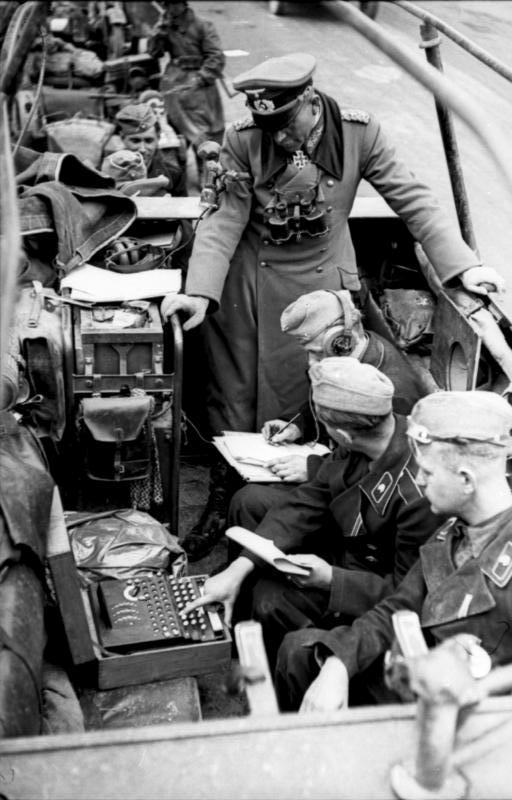
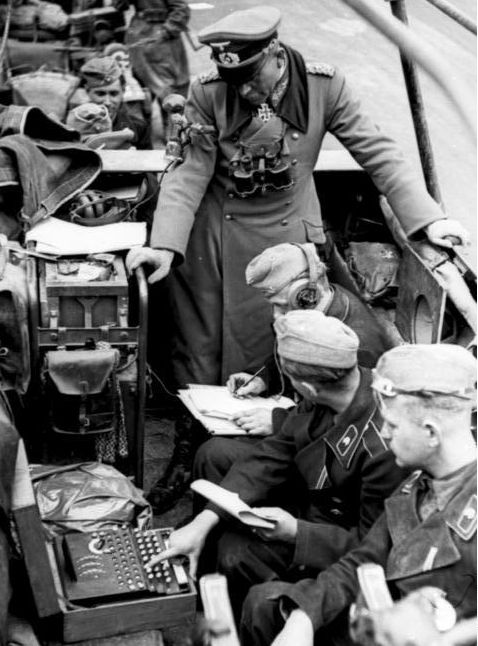
When World War II began, Guderian held the rank of General der Panzertruppe and led an armoured corps into Poland. His most celebrated operational moment came the following year in France, where he commanded the armoured units that punched through the Ardennes forest and shattered Allied defenses at the Battle of Sedan, a breakthrough that helped collapse Western resistance. By 1941 he had risen to Colonel General and was given command of the 2nd Panzer Army for Operation Barbarossa, the massive invasion of the Soviet Union. The campaign initially surged forward but ultimately ground to a halt when Operation Typhoon failed to seize Moscow. A sharp disagreement with Hitler followed, and Guderian was dismissed from his command. His wartime record thus spans a remarkable arc: from the pioneering armored thrusts of 1939-1940 to the frozen stalemate on the Eastern Front, illustrating both the extraordinary offensive power of the panzer concept and the strategic limits that even its most prominent advocate could not overcome.
The Rebuilder and the Shadow of War Crimes
In early 1943 Hitler created the post of Inspector General of Armoured Troops and placed Guderian in it, giving him sweeping responsibility for rebuilding and training new panzer forces. Yet Germany's deteriorating war economy meant his efforts yielded only limited results. After the 20 July Plot to assassinate Hitler, Guderian was named Acting Chief of the General Staff of the Army High Command. In the same turbulent aftermath, Hitler appointed him to the Court of Honour, a body used to strip officers of their commissions so they could be handed to the People's Court for execution. Guderian also served as Hitler's personal advisor on the Eastern Front, binding him more tightly to the Nazi regime. His command record carried darker stains: troops under his authority carried out the criminal Commissar Order during Barbarossa, and he was implicated in reprisals following the Warsaw Uprising of 1944. These facts complicate any narrative that separates his military expertise from the atrocities of the war he helped wage.
Memoirs, Myths, and Historical Reckoning
Guderian surrendered to American forces on 10 May 1945 and spent the next three years in internment. Released in 1948 without facing any charges, he turned to writing. His autobiography, Memoirs of a Soldier, appeared in 1950 and became a bestseller, presenting him as the singular originator of the panzer force and refusing to acknowledge that units under his command committed war crimes. Historians in subsequent decades identified these passages as part of the broader clean Wehrmacht myth, and the book drew sustained criticism. A revised 1952 edition, retitled Panzer Leader, corrected some of the factual errors and included a foreword by the British military historian B. H. Liddell Hart, though the fundamental self-portrait remained largely intact. Guderian died on 14 May 1954 and was buried in Goslar. His legacy endures as a double inheritance: the genuine innovation of combined-arms armored warfare on one hand, and the moral and historical distortions embedded in his own telling on the other.
Gallery
Frequently Asked Questions
Who is Heinz Guderian?
Heinz Wilhelm Guderian (1888–1954) was a German general and military theorist best remembered as the driving force behind the blitzkrieg doctrine and the panzer division concept. He is widely regarded as the architect of modern armored warfare.
What was Heinz Guderian's role in World War II?
Guderian commanded armored divisions in the 1939 invasion of Poland, the 1940 campaign against France, and the 1941 advance into the Soviet Union. His units were central to the rapid, mobile offensives that defined early German successes in the war.
How did Heinz Guderian shape the concept of blitzkrieg?
Rather than treating tanks as mere infantry support, Guderian argued for concentrating them into dedicated armored formations capable of deep, fast penetrations. His writings and field exercises in the 1930s laid the doctrinal groundwork that the Wehrmacht later put into practice.
Which major campaigns did Heinz Guderian lead?
He led panzer forces during the invasions of Poland (1939), France (1940), and the Soviet Union (1941). These three operations remain the most cited examples of the armored-warfare tactics he championed.
How did Heinz Guderian's life end?
Guderian died on 14 May 1954 and was buried in Goslar, Germany. He never held a political office after the war and spent his remaining years writing and reflecting on his military career.
More in Military Commanders Of The World Wars 1-24
Spotted an error? Know more?
This is a living reference — every entry is fact-audited, and reader corrections feed straight into our audit queue. Suggest an edit · See this site's audit record