Ernst Udet
German WWI ace and Luftwaffe general who pioneered dive-bombing.

Unknown author · Public domain
Ernst Udet (26 April 1896 – 17 November 1941) was a German pilot during World War I and a Luftwaffe Colonel-General (Generaloberst) during World War II. He was the highest scoring German fighter pilot to survive World War I, with 62 confirmed victories, and the second-highest scoring after Manfred von Richthofen. Udet later became a key figure in the early development of the Luftwaffe, influencing dive-bombing techniques and the Stuka dive bomber.
- born
- 26 April 1896, Frankfurt am Main, German Empire
- died
- 17 November 1941, suicide by shooting
- nationality
- German
- known_for
- World War I flying ace (62 victories), Luftwaffe Colonel-General, advocate of di
Verified Timeline
Lore & Background
Ernst Udet grew up in Munich, fascinated by aviation from childhood. He joined the Imperial German Air Service in April 1915 after private flight training, initially serving as an observer pilot. He scored his first victory on 18 March 1916, and by the end of World War I had 62 confirmed victories, serving under Manfred von Richthofen and later Hermann Göring. After the war, Udet spent the 1920s and early 1930s as a stunt pilot, barnstormer, light-aircraft manufacturer, and playboy. Udet joined the Nazi Party on 1 May 1933 and became involved in the early development of the Luftwaffe, where he was appointed director of research and development. He was influential in the adoption of dive-bombing techniques and the Stuka dive bomber. By 1939 he had risen to Chief of Procurement and Supply for the Luftwaffe. The stress of the position and his distaste for administrative duties led to alcoholism. The launch of Operation Barbarossa on 22 June 1941, combined with issues with the Luftwaffe's needs for equipment outstripping Germany's production capacity and increasingly poor relations with the Nazi Party, caused Udet to choose suicide on 17 November 1941 by shooting himself in the head.
Reader's Guide
Ernst Udet's significance lies in his dual legacy as a celebrated World War I flying ace and a key figure in the early development of the Luftwaffe. As the highest-scoring German ace to survive World War I, his combat record and charismatic persona made him a national hero. His post-war career as a stunt pilot and barnstormer kept aviation in the public eye. However, his most lasting impact came from his role in shaping Luftwaffe doctrine, particularly his advocacy for dive-bombing, which led to the adoption of the Stuka. His tenure as Chief of Procurement and Supply was marked by administrative strain and alcoholism, reflecting the pressures of wartime logistics and political tensions. His suicide in 1941 highlighted the internal crises within the Nazi military hierarchy. Udet's life encapsulates the transition from the romanticized aerial duels of World War I to the industrial-scale warfare of World War II, and his story serves as a cautionary tale about the burdens of leadership under a totalitarian regime.
Did You Know?
- Udet was only 160 cm (5 ft 3.0 in) tall and was initially rejected for enlistment in the Imperial German Army on 2 August 1914.
- He received his civilian pilot's license at the end of April 1915 after private training costing 2,000 Deutsche Marks (about $400 in 1915 U.S. dollars).
- During his first aerial combat on 18 March 1916, Udet initially could not bring himself to fire on another person, but after being shot at, he learned to attack aggressively and downed a Farman F.40.
- Udet once encountered French ace Georges Guynemer in single combat; after Udet's machine guns jammed, Guynemer waved farewell and flew away instead of taking advantage.
- Udet was court-martialed for losing an aircraft due to bad judgment—overloaded with fuel and bombs, it stalled after a sharp bank—but both he and his observer survived with minor injuries.
Early Life and the Road to the Skies
Ernst Udet came into the world on 26 April 1896 in Frankfurt am Main, though it was Munich that shaped his formative years. From a young age he displayed a bright, cheerful disposition and an almost magnetic pull toward anything with wings. He would spend hours hanging around a local airplane factory and an army airship detachment, soaking in the mechanics and romance of flight. In 1909 he co-founded the Munich Aero-Club, a testament to how deeply aviation had captured his imagination. His early enthusiasm was not without cost: after crashing a glider he and a friend had built, he had to wait until 1913 to finally take to the air, riding along with a test pilot at the Otto Works, the aircraft factory owned by Gustav Otto that had become a second home to him. This childhood obsession would ultimately define his entire life.
The Ace of the Flying Circus
When the Great War erupted, Udet's path to the cockpit was far from straightforward. Standing only 160 centimetres, he was initially rejected for army enlistment and instead served as a motorcycle messenger with the 26th Württemberg Reserve Division. A shoulder injury and a chance meeting with officers from the Chauny flying sector nudged him toward aerial service. Unable to gain a place in official pilot training, he turned to a family friend—Gustav Otto, whose factory he had frequented as a boy—and paid 2,000 marks for private flight instruction. By late April 1915 he held a civilian licence and was absorbed into the Imperial German Air Service. His early observer work in FFA 206 earned him an Iron Cross for nursing a damaged Aviatik B.I back to friendly lines, but it was a court-martial for a crash, followed by a daring display of aerobatics to shake a stuck bomb from his landing gear, that secured his transfer to fighter command. Under Manfred von Richthofen and later Hermann Göring, Udet racked up 62 confirmed victories, becoming the highest-scoring German ace to survive the war and the second-highest overall, behind only Richthofen himself.
Barnstormer, Builder, and Architect of the Luftwaffe
Between the wars, Udet reinvented himself as a showman and entrepreneur. Throughout the 1920s and into the early 1930s he worked as a stunt pilot and international barnstormer, thrilling crowds with daring aerial displays. He also ventured into manufacturing light aircraft, applying his hands-on knowledge of flight to building machines for civilian use. His off-duty life matched his airborne one in spectacle: he was widely known as a playboy, living large and chasing the next thrill. On 1 May 1933, just weeks before the Luftwaffe was officially established on 15 May, Udet joined the Nazi Party. He was then appointed director of research and development for the new air force, a role in which he wielded considerable influence over tactical doctrine. He was instrumental in championing dive-bombing techniques and in pushing the adoption of the Stuka dive bomber into service. By 1939 his career had climbed to the post of Chief of Procurement and Supply for the Luftwaffe, a position that placed him at the administrative heart of the world's most rapidly expanding air force.
The Weight of Command and a Final Decision
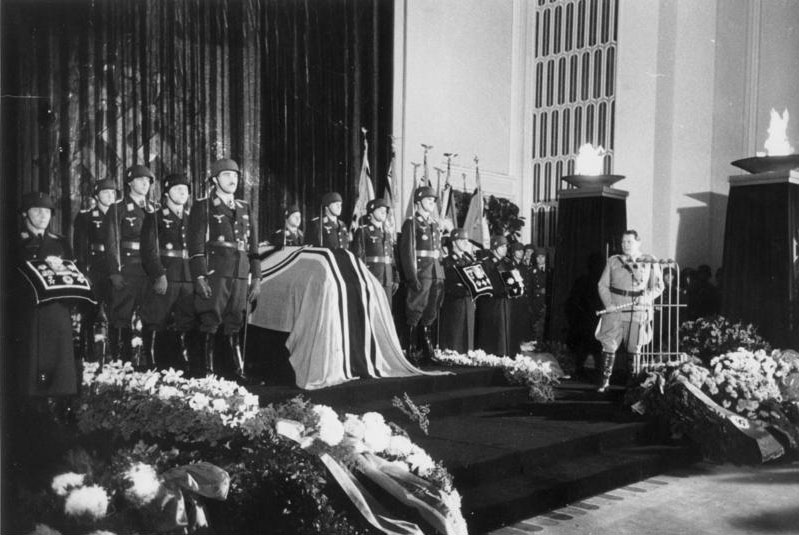
The very role that had made Udet indispensable to the Luftwaffe ultimately became the source of his deepest suffering. The crushing stress of overseeing procurement and supply, combined with a genuine distaste for the bureaucratic grind of administrative duties, drove him into alcoholism. His once-vivid personality dimmed as the machinery of war demanded more from him than he could give. The invasion of the Soviet Union, launched as Operation Barbarossa on 22 June 1941, compounded his anguish. The Luftwaffe's insatiable appetite for equipment far outstripped Germany's industrial production capacity, and Udet found himself caught between impossible demands and a political environment that grew increasingly hostile. His relations with the Nazi Party deteriorated sharply, leaving him isolated in a position he had once embraced with enthusiasm. On 17 November 1941, unable to bear the weight any longer, Ernst Udet ended his life by shooting himself in the head. He was forty-five years old.
Gallery
Frequently Asked Questions
Who is Ernst Udet?
Ernst Udet was a German military aviator who rose from a World War I fighter ace to a Colonel-General in the Luftwaffe during World War II. He is best remembered for his combat record in the first war and his later influence on dive-bombing doctrine.
How many aerial victories did Udet claim in World War I?
Udet was credited with 62 confirmed kills, making him the top-scoring German ace who survived the war. He finished second overall behind Manfred von Richthofen in the German victory rankings.
What was Udet's role in the Luftwaffe during World War II?
He served as a Colonel-General and was a central figure in shaping the early Luftwaffe's tactical approach. His advocacy for steep dive-bombing directly influenced the development and doctrine behind the Stuka.
Why is Ernst Udet considered important to military aviation history?
Udet helped establish dive-bombing as a core tactical concept, which became a signature element of German air power in the 1930s and 1940s. His post-war I experience and interwar advocacy bridged the gap between WWI fighter tactics and WWII close-support bombing.
How did Ernst Udet die?
Udet took his own life by shooting himself on 17 November 1941. He was 45 years old at the time of his death.
More in Military Commanders Of The World Wars 1-24
Spotted an error? Know more?
This is a living reference — every entry is fact-audited, and reader corrections feed straight into our audit queue. Suggest an edit · See this site's audit record